
Last Sunday, February 15 at 12:00 p.m., the Dome of the Niemeyer Center was much more than a concert hall: it became a launch platform. There, El León de Oro didn’t simply offer a performance, but rather began an emotional countdown that culminated in a sonic liftoff, one of those moments that leaves a lasting mark. The audience, with tickets sold out days in advance, waited like those anticipating the roar of engines before breaking through the atmosphere.
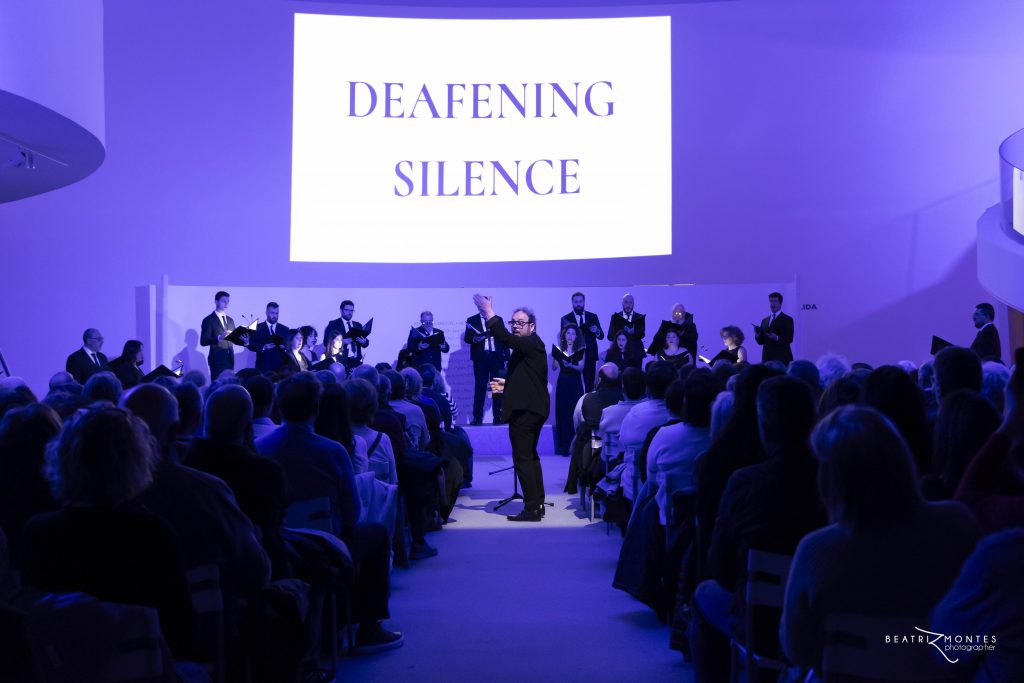
The countdown began in silence. A dense silence, heavy with meaning, almost electric. It wasn’t absence, it was raw material. It was the invisible fuel that would power the journey. The programme, structured around the idea of “deafening silence”, turned every pause into a space of contained tension, that suspended instant in which anything can happen. As the magazine Scherzo noted, it was a breathtaking concert—an experience that compelled the audience to listen even to what could not be heard.
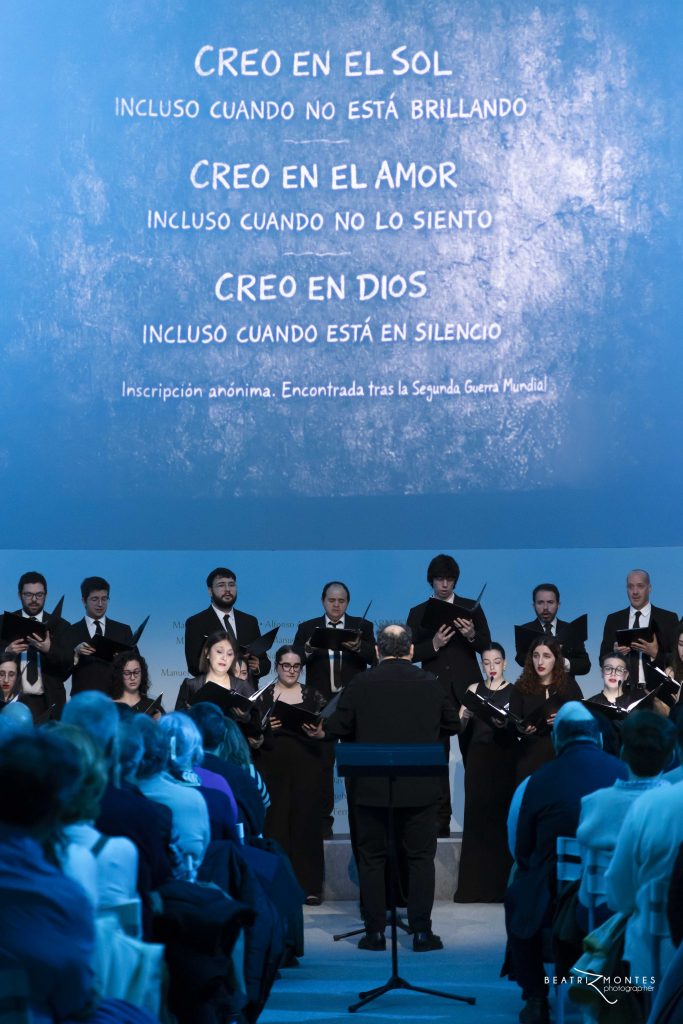
Then the first voices arrived—precise and homogeneous—rising with a purity that recalled the gradual ignition of rocket thrusters. The blend was impeccable, the timbre beautiful and compact, the tuning pinpoint accurate. Each vocal section fitted into a perfectly functioning mechanism, while the acoustics of the dome acted like a resonance chamber, expanding the sound until it enveloped everything. There were no cracks, no turbulence: the ascent was steady, confident, and imposing.
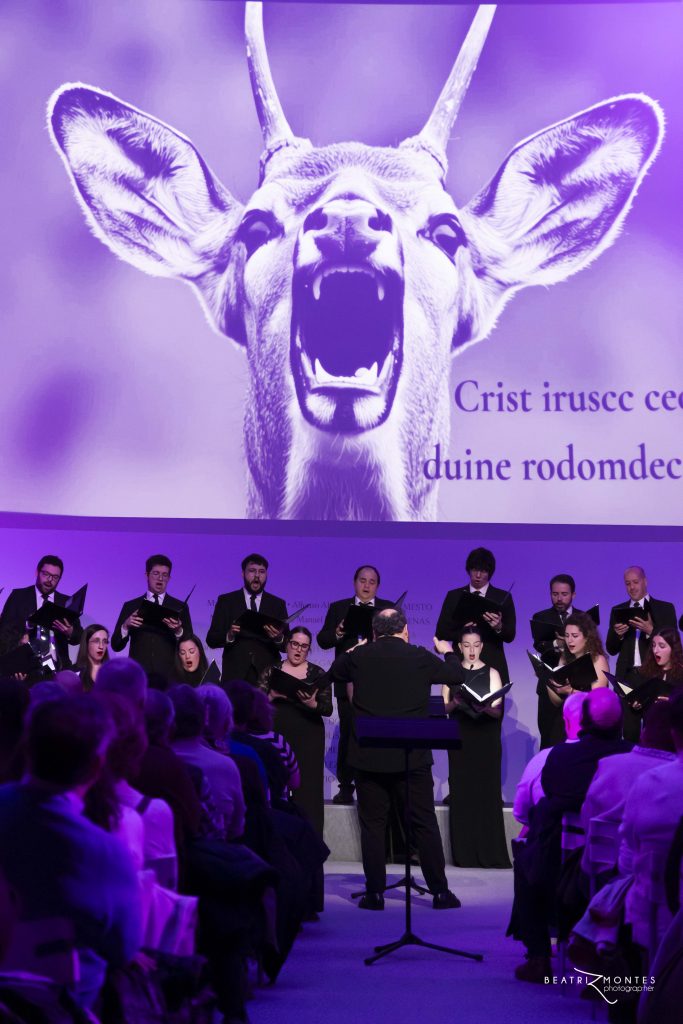
The selected works were a success from beginning to end: Andrea Venturini and his Deafening Silence, which gave the programme its title; Lorenzo Donati with Davanti alle tenebre, Dentro alle tenebre and Oltre le tenebre; Arvo Pärt and his Nunc dimittis and The Deer’s Cry; John Cage (the only composer no longer living) with his controversial 4′33″, a work whose very title indicates the duration of a magical silence; Kim André Arnesen with Even When He Is Silent; and Eric Whitacre with Water Night and When David Heard. The pauses did not interrupt the musical discourse—they sustained it. Just as in outer space, the void became the frame that allows the stars to shine.
There were moments of almost unreal beauty, the kind that make you hold your breath. The audience remained motionless, aware that they were witnessing something extraordinary. The voices seemed to float, weightless, suspended in a sonic orbit where time dissolved. It was not only technical perfection; it was emotion channelled with intelligence, expressive depth, an invitation to look inward while the music carried us upward.
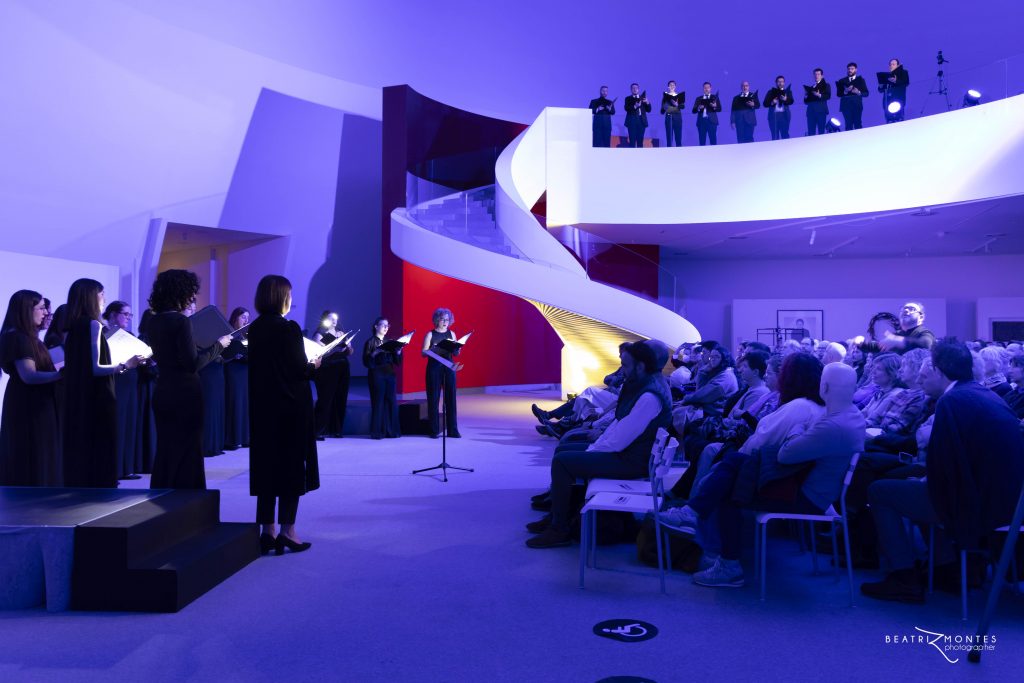
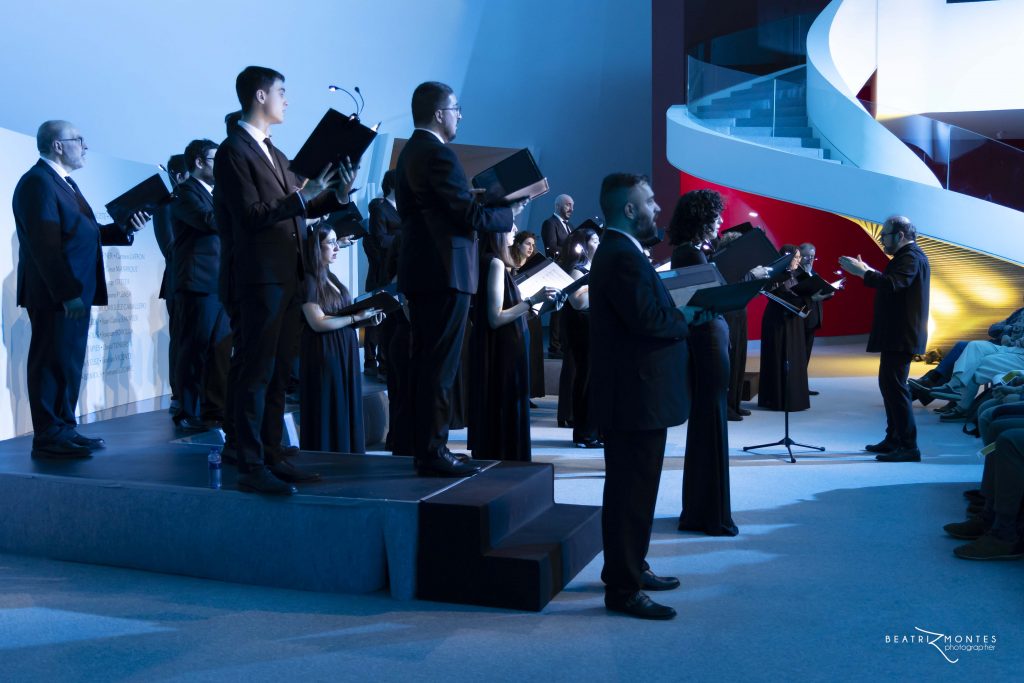
Under the artistic and musical direction of Marco Antonio García de Paz, El León de Oro demonstrated an artistic maturity that places it in a category of its own. His firm and meticulous gesture shaped every entrance and every breath, like someone calculating the exact trajectory of a spacecraft. He knew how to measure the tension, manage the silence, and release the energy at precisely the right moment, achieving a balance that bordered on the sublime. His creativity was further enhanced by the text he wrote for the occasion, which one of the choir members, Ángel Gavela, read with delicacy and feeling while descending the spiral staircase.
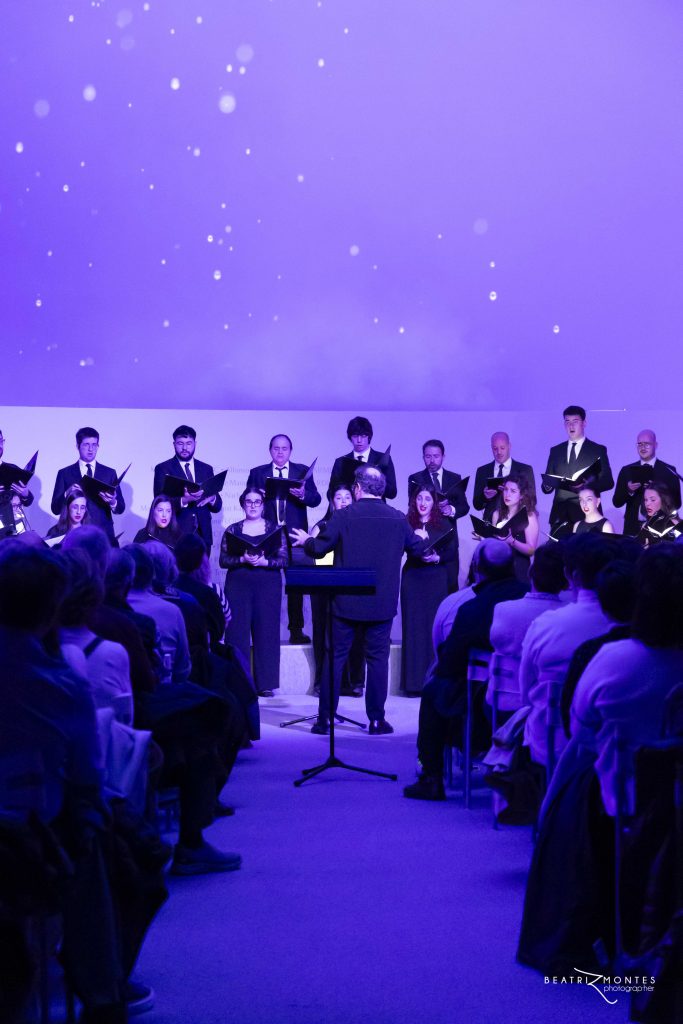
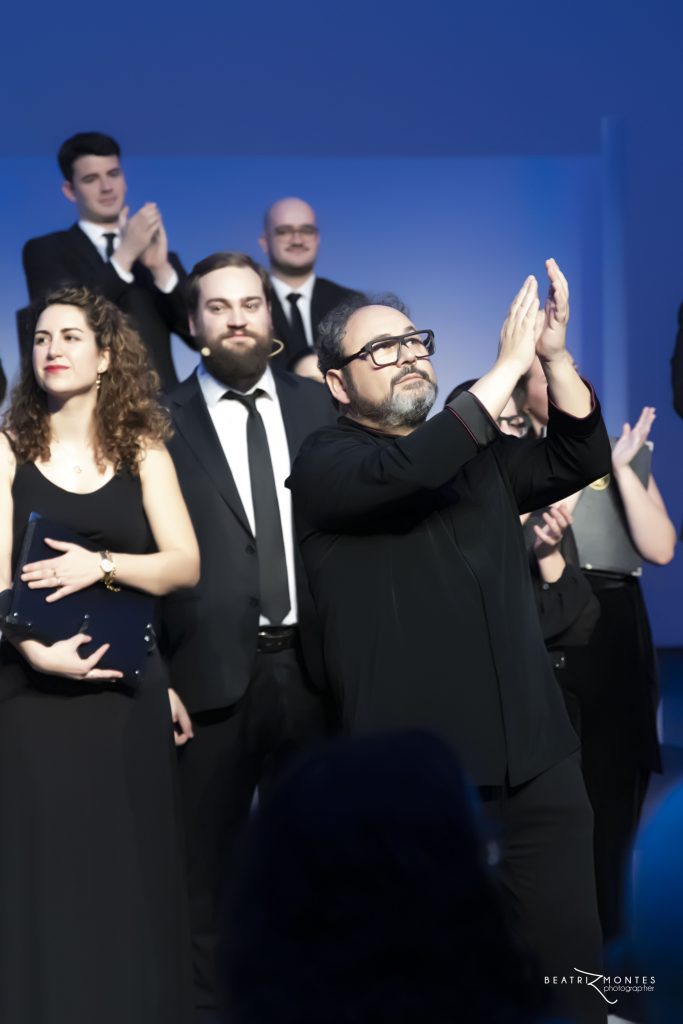
When the end finally came, there was no thunderous explosion, but rather the sensation of having passed through the atmosphere and now gazing at the Earth from a different perspective. The applause was long, warm, and inevitable. Because what we experienced was not simply a concert, but a journey—a choral journey that confirmed that El León de Oro does not merely sing: it launches, crosses boundaries, and carries us, with astonishing naturalness, to infinity and beyond.
You can find more detailed info at:
Revista Scherzo – El León de Oro: un concierto sobrecogedor en torno al silencio
La música en Siana – Silencios sonOROs
La Nueva España – El León de Oro le grita al silencio
El Comercio – El silencio y el clamor de un público comprometido resuenan en el Niemeyer (pdf)